Direkt zum Inhalt

6. November 2026TransformationConsulting

Wer steuert deine IT? Was ein CIO heute leisten muss und wann einer auf Zeit reichtWho steers your IT? What a CIO has to deliver today and when an interim one is enough

Die Firma läuft auf IT, gesteuert wird sie oft von niemandem. Acht Felder, die ein CIO heute von oben führt, was NIS2 und AI Act der Geschäftsführung abverlangen und wann ein CIO auf Zeit die bessere Wahl ist. Mit dem Spot dazu.Your company runs on IT, yet often nobody steers it. Eight fields a CIO leads from the top, what NIS2 and the AI Act demand of management and when an interim CIO is the better choice. With the spot.

Deine Firma läuft auf IT. Wer steuert sie? Bei vielen Mittelständlern lautet die ehrliche Antwort: ein IT-Leiter, der den Betrieb am Laufen hält, drei Dienstleister mit eigenen Verträgen und eine Geschäftsführung, die Entscheidungen trifft, ohne das ganze Bild zu sehen. Das ging lange gut. Mit KI, NIS2 und dem AI Act geht es nicht mehr gut.

der kern in drei sätzen

Ein CIO steuert heute nicht die Technik, sondern acht Felder, in denen sich Geld, Risiko und Tempo des ganzen Unternehmens entscheiden. Seit NIS2 trägt die Geschäftsführung die Verantwortung für das Risikomanagement selbst, und die nächsten Fristen des AI Act stehen fest. Wer dafür keinen eigenen CIO braucht oder findet, holt sich einen auf Zeit, der ein klares Bild, eine Richtung und ein Steuerungsmodell hinterlässt.

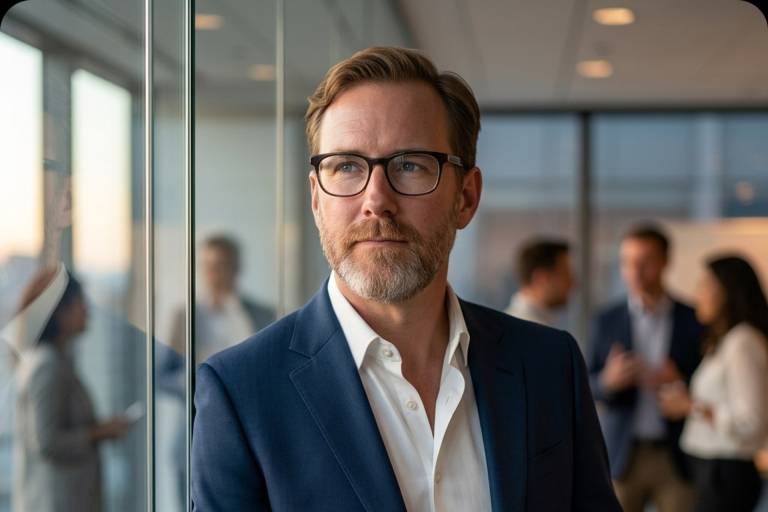
Steffen Herr präsentiert in einem hellen Besprechungsraum der Geschäftsführerin und zwei Vorstandsmitgliedern eine leuchtende Systemlandschaft auf einem großen Bildschirm
Szene aus dem Spot. Bild: KI-generiert auf Grundlage echter Fotos von Steffen Herr, die Geschäftsführerin ist eine erfundene Figur.
Spot, 48 Sekunden, mit Ton. Szenen KI-generiert aus echten Fotos (Nano Banana Pro, Gemini Omni Flash), Musik Suno, Schnitt HyperFrames.

Warum IT jetzt Chefsache ist

Drei Entwicklungen treffen 2026 zusammen.

KI ist im Betrieb angekommen. Laut Bitkom setzen 57 Prozent der Unternehmen ab 20 Beschäftigten KI ein, ein Jahr zuvor waren es 36 Prozent. 45 Prozent geben 2026 mehr Geld dafür aus als im Vorjahr. KI-Agenten, die Aufgaben selbstständig erledigen, nutzen 11 Prozent, weitere 29 Prozent planen sie. Bitkom-Präsident Ralf Wintergerst sagt dazu: „Bei KI geht es nicht in erster Linie um das eingesetzte Modell.“ Den größten Aufwand machen Daten, verbundene Systeme und Rechenkapazität. Genau das ist das Arbeitsfeld eines CIO.

Cybersicherheit ist Pflicht der Geschäftsleitung. Das NIS-2-Umsetzungsgesetz ist am 6. Dezember 2025 in Kraft getreten und gilt für rund 29.500 Unternehmen in Deutschland. Eine allgemeine Übergangsfrist gibt es nicht. Die Geschäftsleitung muss die Maßnahmen zum Risikomanagement billigen, ihre Umsetzung überwachen und sich schulen lassen. Auch wenn die IT ausgelagert ist, bleibt die Verantwortung bei ihr.

Für KI gelten feste Fristen. Seit 2. August 2026 gelten die Transparenzpflichten des AI Act nach Artikel 50. Für Hochrisiko-Systeme nach Anhang III, etwa in Personalauswahl, Kreditvergabe oder Bildung, hat der Digital Omnibus den Start auf den 2. Dezember 2027 verschoben. KI in regulierten Produkten wie Maschinen folgt am 2. August 2028.

Fristen, die die Geschäftsführung kennen sollte

Vier Daten, die IT zur Chefsache machen.

  1. Dez 2025
    NIS2 in Deutschland in Kraft

    Rund 29.500 Unternehmen. Keine allgemeine Übergangsfrist. Geschäftsleitung billigt, überwacht, lässt sich schulen.

  2. Aug 2026
    AI Act: Transparenz

    Transparenzpflichten nach Artikel 50 gelten.

  3. Dez 2027
    AI Act: Hochrisiko, Anhang III

    Etwa Personalauswahl, Kreditvergabe oder Bildung, verschoben durch den Digital Omnibus.

  4. Aug 2028
    AI Act: Hochrisiko, Anhang I

    KI in regulierten Produkten wie Maschinen.

Quellen: BSI, Fragen und Antworten zu NIS-2; Verordnung (EU) 2026/1744. Keine Rechtsberatung.

Das sind keine IT-Themen mehr. Es sind Fragen nach Haftung, Kosten und Wettbewerbsfähigkeit. Und sie landen auf dem Tisch der Geschäftsführung.

Acht Felder, die ein CIO von oben steuert

Im Spot fallen acht Wörter im Takt der Musik. Sie sind kein Effekt, sondern die Liste, mit der ich in jedes Mandat gehe. Ein CIO, der nur Server und Tickets verwaltet, deckt zwei davon ab.

Das CIO-Cockpit

Acht Felder. Ein Bild für die Geschäftsführung.

  • Strategie

    Welche Geschäftsziele IT in den nächsten 24 Monaten trägt.

  • Architektur

    Welche Systeme es gibt und wo abgetippt wird.

  • Daten

    Wem die Stammdaten gehören und was das Haus verlässt.

  • KI

    Ein kurzer Freigabeweg, klare Grenzen für Agenten.

  • Sicherheit

    Geprüfte Wiederherstellung, Notfallplan, Risikobild.

  • Kosten

    Lizenzen, Cloud, Dienstleister und KI-Nutzung in einer Sicht.

  • Regeln

    NIS2, AI Act, DSGVO als wenige prüfbare Regeln.

  • Menschen

    Rollen, Vertretungen, Schulung, ein Team, das Änderungen trägt.

1. Strategie

Welche zwei oder drei Geschäftsziele soll IT in den nächsten 24 Monaten tragen? Ohne diese Antwort wird jedes Budget zur Wunschliste. Die IT-Strategie passt auf eine Seite und nennt, was die Firma bewusst nicht macht.

2. Architektur

Welche Systeme gibt es, wer spricht mit wem, wo wird abgetippt? Eine Landkarte der Anwendungen zeigt Doppelungen, Medienbrüche und die Stellen, an denen ein Ausfall den Betrieb stoppt. Sie ist die Grundlage jeder ERP-, Cloud- oder KI-Entscheidung.

3. Daten

KI ist nur so gut wie die Daten, die sie bekommt. Wem gehören die Stammdaten, wer pflegt sie, welche Daten verlassen das Haus? Ohne geklärte Verantwortung bleibt jede Auswertung eine Meinung.

4. KI

Nicht jedes Werkzeug, das jemand ausprobiert, gehört in den Betrieb. Ich arbeite mit einem kurzen Freigabeweg: Nutzen, Risiko, Datenschutz, Verantwortliche. Für Agenten kommen klare Grenzen dazu: was sie dürfen, wann ein Mensch entscheidet, wo jede Aktion protokolliert wird.

5. Sicherheit

Backups, die wiederhergestellt wurden, nicht nur geschrieben. Ein Notfallplan, den das Team kennt. Ein Bild der Risiken, das die Geschäftsführung billigen kann, wie NIS2 es verlangt.

6. Kosten

Lizenzen, Cloud, Dienstleister, KI-Nutzung: Die Summe kennt oft niemand. Ein CIO macht sie sichtbar, ordnet sie den Geschäftszielen zu und kündigt, was keinen Zweck mehr hat.

7. Regeln

NIS2, AI Act, DSGVO, Aufbewahrungspflichten und die Anforderungen großer Kunden in der Lieferkette. Ich übersetze sie in wenige, prüfbare Regeln für den Alltag. Die rechtliche Bewertung im Einzelfall bleibt bei euren Fachleuten.

8. Menschen

Am Ende arbeiten Menschen mit den Systemen. Rollen, Vertretungen, Schulungen und ein Team, das Änderungen trägt, entscheiden darüber, ob eine Einführung bleibt oder nach ein paar Wochen wieder dem alten Ablauf weicht.

CIO, CTO, CDO, CISO: wer macht was

Im Konzern sind das vier Stellen. Im Mittelstand ist es oft eine Person oder keine. So grenze ich die Rollen ab:

RolleVerantwortetTypische Frage
CIOIT-Strategie, Architektur, Betrieb, Partner, Kosten, SteuerungTrägt unsere IT das Geschäft von morgen?
CTOTechnik im eigenen ProduktWie bauen wir das Produkt?
CDODatengetriebene GeschäftsmodelleWas verdienen wir mit Daten?
CISOInformationssicherheit und CyberrisikoWie sicher sind wir, und wie schnell sind wir wieder da?

Wer keine Software verkauft, braucht selten einen CTO. Einen CIO braucht jede Firma, deren Betrieb ohne IT stillsteht. Das ist heute fast jede.

Wann ein CIO auf Zeit die bessere Wahl ist

Ein fest angestellter CIO lohnt sich, wenn die Firma dauerhaft eine Führungskraft in dieser Breite auslasten kann. Viele Mittelständler können das nicht, oder finden niemanden. Ein CIO auf Zeit passt, wenn:

  • der IT-Leiter den Betrieb trägt, aber niemand die Richtung vorgibt,
  • eine große Entscheidung ansteht, etwa ERP, Cloud oder ein KI-Programm,
  • NIS2 oder Kundenaudits ein Risikobild verlangen, das es noch nicht gibt,
  • die Stelle frei ist und die Suche Monate dauert,
  • Kosten und Dienstleister aus dem Ruder gelaufen sind.

Ich übernehme CIO-Mandate in der Regel mit zwei bis drei Tagen pro Woche vor Ort. Das Ziel ist nicht, unersetzlich zu werden. Am Ende steht ein Steuerungsmodell, das eure Leute selbst führen.

Die ersten 100 Tage

CIO auf Zeit

100 Tage: Bild, Richtung, Steuerung.

  1. 1–30
    Das Bild

    Gespräche mit Geschäftsführung, Fachbereichen, Dienstleistern. Anwendungslandkarte, Verträge und Kosten, Risikobild. Eine Seite zum Stand.

  2. 31–60
    Die Richtung

    IT-Strategie auf einer Seite, nach Nutzen und Risiko geordnet. Die drei Vorhaben, die zuerst kommen, und die, die stoppen. Freigabeweg für KI.

  3. 61–100
    Die Steuerung

    Ein Cockpit mit den acht Feldern, Ampeln statt Zahlenfriedhof. Ein fester Termin pro Monat. Rollen und Vertretungen geklärt.

Tag 1 bis 30: das Bild. Gespräche mit Geschäftsführung, Fachbereichen und Dienstleistern. Anwendungslandkarte, Vertrags- und Kostenübersicht, Risikobild. Am Ende steht auf einer Seite, wo die Firma heute steht.

Tag 31 bis 60: die Richtung. IT-Strategie auf einer Seite, priorisiert nach Nutzen und Risiko. Die drei Vorhaben, die zuerst kommen, und die, die gestoppt werden. Freigabeweg für KI.

Tag 61 bis 100: die Steuerung. Ein Cockpit mit den acht Feldern, Ampeln statt Zahlenfriedhof. Ein fester Termin mit der Geschäftsführung pro Monat. Rollen und Vertretungen sind geklärt, die ersten Ergebnisse sichtbar.

Danach entscheidet ihr: weiter mit mir als CIO auf Zeit, Übergabe an eine eigene Besetzung oder eine Begleitung im Hintergrund.

Wie der Spot entstanden ist

Es gibt keinen Dreh. Die Szenen mit mir sind KI-Bilder auf Grundlage echter Fotos von mir, erzeugt mit Nano Banana Pro und bewegt mit Gemini Omni Flash. Server, Glasfaser, Stadt und Fabrik sind reine Textprompts ohne Menschen. Jedes Bild mit meinem Gesicht habe ich abgenommen, bevor es animiert wurde. Die Geschäftsführerin im Film ist eine erfundene Figur.

Der Schnitt folgt einer einfachen Idee: Am Anfang und im Mittelteil Tempo wie im Musikvideo, Schnitt auf den Takt, die acht Wörter auf die Schläge. In der Lösung wird es ruhig, lange Einstellungen, große Schrift, ein Gedanke pro Bild. Die Musik ist ein einziges Stück aus Suno. Geschnitten und betitelt ist der Film in HyperFrames. Der Film ist als KI-generiert gekennzeichnet.

Häufige Fragen

Was macht ein CIO genau?

Er verantwortet IT-Strategie, Architektur, Daten, KI-Einsatz, Sicherheit, Kosten, Regeln und die Menschen, die mit den Systemen arbeiten. Er übersetzt Geschäftsziele in IT-Entscheidungen und berichtet an die Geschäftsführung.

Braucht ein Mittelständler überhaupt einen CIO?

Jede Firma, deren Betrieb ohne IT stillsteht, braucht jemanden, der die IT von oben steuert. Ob das eine feste Stelle, ein CIO auf Zeit oder eine Begleitung im Hintergrund ist, hängt von Größe, Lage und anstehenden Entscheidungen ab.

Was ist der Unterschied zwischen CIO und CTO?

Der CIO steuert die IT, mit der das Unternehmen arbeitet. Der CTO verantwortet die Technik im eigenen Produkt. Wer keine Software verkauft, braucht meist keinen CTO.

Welche Pflichten hat die Geschäftsführung nach NIS2?

Sie muss die Maßnahmen zum Risikomanagement billigen, ihre Umsetzung überwachen und an Schulungen teilnehmen. Das gilt seit dem 6. Dezember 2025 für die betroffenen Einrichtungen, ohne allgemeine Übergangsfrist. Ob deine Firma betroffen ist, klärt die Betroffenheitsprüfung des BSI.

Wie lange dauert ein Mandat als CIO auf Zeit?

Das hängt vom Auftrag ab. Die ersten 100 Tage liefern Bild, Richtung und Steuerung. Danach entscheidet ihr, ob ich weiter begleite oder an eine eigene Besetzung übergebe.

Nächster Schritt

Wenn du beim Lesen an deine eigene IT gedacht hast: Im Erstgespräch schauen wir 30 Minuten auf deine Lage. Kostenlos, danach weißt du, ob und wie ich helfen kann. Mehr zu meinen Interim-Mandaten als CIO, COO und CRO steht auf complexredugyzer.de/interim-management.

Quellen und Stand

Stand: 6. November 2026.

Dieser Beitrag ersetzt keine Rechtsberatung.
Your company runs on IT. Who steers it? In many mid-sized companies the honest answer is: an IT manager who keeps operations running, three vendors with their own contracts and a management team that makes decisions without seeing the whole picture. That worked for a long time. With AI, NIS2 and the AI Act it no longer does.

the core in three sentences

Today a CIO does not steer technology but eight fields in which money, risk and pace of the whole company are decided. Since NIS2, management carries responsibility for risk management itself, and the next AI Act deadlines are fixed. If you do not need or cannot find your own CIO, bring one in for a defined term who leaves behind a clear picture, a direction and a steering model.

Steffen Herr presents a glowing system landscape on a large screen to the managing director and two board members in a bright meeting room
Scene from the spot. Image: AI-generated from real photos of Steffen Herr, the managing director is a fictional character.
Spot, 48 seconds, with sound, German on-screen text. Scenes AI-generated from real photos (Nano Banana Pro, Gemini Omni Flash), music Suno, edit HyperFrames.

Why IT is now a board topic

Three developments come together in 2026.

AI has reached operations. According to Bitkom, 57 percent of German companies with 20 or more employees use AI, up from 36 percent a year earlier. 45 percent are spending more on it in 2026 than the year before. 11 percent use AI agents that complete tasks on their own, another 29 percent are planning to. Bitkom president Ralf Wintergerst puts it like this: AI is not primarily about the model you use. Data, connected systems and computing capacity take the most effort. That is exactly a CIO’s field.

Cybersecurity is a duty of management. The German NIS2 implementation act came into force on 6 December 2025 and applies to around 29,500 companies in Germany. There is no general transition period. Management must approve the risk management measures, monitor their implementation and be trained. Even if IT is outsourced, responsibility stays with management.

AI has fixed deadlines. The transparency obligations under Article 50 of the AI Act apply from 2 August 2026. For high-risk systems under Annex III, for example in recruiting, credit or education, the Digital Omnibus has moved the start to 2 December 2027. AI in regulated products such as machinery follows on 2 August 2028.

Deadlines management should know

Four dates that make IT a board topic.

  1. Dec 2025
    NIS2 in force in Germany

    Around 29,500 companies. No general transition period. Management approves, monitors and gets trained.

  2. Aug 2026
    AI Act: transparency

    Transparency obligations under Article 50 apply.

  3. Dec 2027
    AI Act: high-risk, Annex III

    For example recruiting, credit or education, postponed by the Digital Omnibus.

  4. Aug 2028
    AI Act: high-risk, Annex I

    AI in regulated products such as machinery.

Sources: BSI, NIS-2 FAQ; Regulation (EU) 2026/1744. Not legal advice.

These are no longer IT topics. They are questions of liability, cost and competitiveness. And they land on management’s desk.

Eight fields a CIO steers from the top

In the spot, eight words hit on the beat of the music. They are not an effect but the list I bring to every mandate. A CIO who only manages servers and tickets covers two of them.

The CIO cockpit

Eight fields. One picture for management.

  • Strategy

    Which business goals IT carries for the next 24 months.

  • Architecture

    Which systems exist and where data gets retyped.

  • Data

    Who owns master data and what leaves the company.

  • AI

    A short approval path, clear limits for agents.

  • Security

    Tested restores, an emergency plan, a risk picture.

  • Costs

    Licences, cloud, vendors and AI usage in one view.

  • Rules

    NIS2, AI Act, GDPR as a few checkable rules.

  • People

    Roles, deputies, training, a team that carries change.

1. Strategy

Which two or three business goals should IT carry over the next 24 months? Without that answer every budget becomes a wish list. The IT strategy fits on one page and says what the company deliberately does not do.

2. Architecture

Which systems exist, who talks to whom, where is data retyped? A map of the applications shows duplicates, media breaks and the points where an outage stops operations. It is the basis for every ERP, cloud or AI decision.

3. Data

AI is only as good as the data it gets. Who owns the master data, who maintains it, which data leaves the company? Without clear responsibility every analysis stays an opinion.

4. AI

Not every tool someone tries belongs in operations. I work with a short approval path: value, risk, data protection, owner. For agents there are clear limits on top: what they may do, when a human decides, where every action is logged.

5. Security

Backups that have been restored, not just written. An emergency plan the team knows. A picture of the risks that management can approve, as NIS2 requires.

6. Costs

Licences, cloud, vendors, AI usage: often nobody knows the total. A CIO makes it visible, maps it to business goals and cancels what no longer serves a purpose.

7. Rules

NIS2, AI Act, GDPR, retention duties and the requirements of large customers in the supply chain. I translate them into a few checkable rules for everyday work. The legal assessment of individual cases stays with your specialists.

8. People

In the end, people work with the systems. Roles, deputies, training and a team that carries change decide whether a rollout lasts or gives way to the old routine after a few weeks.

CIO, CTO, CDO, CISO: who does what

In a large group these are four positions. In a mid-sized company it is often one person or none. This is how I separate the roles:

RoleResponsible forTypical question
CIOIT strategy, architecture, operations, partners, costs, steeringDoes our IT carry tomorrow’s business?
CTOTechnology in the company’s own productHow do we build the product?
CDOData-driven business modelsWhat do we earn with data?
CISOInformation security and cyber riskHow secure are we, and how fast are we back?

If you do not sell software, you rarely need a CTO. Every company whose operations stop without IT needs a CIO. Today that is almost every company.

When an interim CIO is the better choice

A permanent CIO pays off when the company can keep a leader of this breadth busy for good. Many mid-sized companies cannot, or cannot find anyone. An interim CIO fits when:

  • the IT manager carries operations but nobody sets the direction,
  • a big decision is coming, such as ERP, cloud or an AI programme,
  • NIS2 or customer audits demand a risk picture that does not exist yet,
  • the position is vacant and the search takes months,
  • costs and vendors have got out of hand.

I usually take on CIO mandates with two to three days a week on site. The goal is not to become indispensable. At the end there is a steering model your own people run.

The first 100 days

Interim CIO

100 days: picture, direction, steering.

  1. 1–30
    The picture

    Talks with management, departments and vendors. Application map, contracts and costs, risk picture. One page on where the company stands.

  2. 31–60
    The direction

    IT strategy on one page, prioritised by value and risk. The three projects that come first and those that stop. AI approval path.

  3. 61–100
    The steering

    A cockpit with the eight fields, traffic lights instead of number graveyards. A monthly slot with management. Roles and deputies settled.

Days 1 to 30: the picture. Talks with management, departments and vendors. Application map, overview of contracts and costs, risk picture. At the end one page shows where the company stands today.

Days 31 to 60: the direction. IT strategy on one page, prioritised by value and risk. The three projects that come first and those that stop. An approval path for AI.

Days 61 to 100: the steering. A cockpit with the eight fields, traffic lights instead of a number graveyard. A fixed monthly slot with management. Roles and deputies are settled, the first results visible.

After that you decide: continue with me as interim CIO, hand over to a permanent hire or support in the background.

How the spot was made

There was no shoot. The scenes with me are AI images based on real photos of me, created with Nano Banana Pro and animated with Gemini Omni Flash. Servers, fibre, city and factory are pure text prompts without people. I approved every image with my face before it was animated. The managing director in the film is a fictional character.

The edit follows a simple idea: at the start and in the middle the pace of a music video, cuts on the beat, the eight words on the hits. In the resolution it calms down, long shots, large type, one thought per image. The music is a single track from Suno. The film was cut and titled in HyperFrames. It is labelled as AI-generated.

Frequently asked questions

What exactly does a CIO do?

A CIO is responsible for IT strategy, architecture, data, use of AI, security, costs, rules and the people who work with the systems, translates business goals into IT decisions and reports to management.

Does a mid-sized company need a CIO at all?

Every company whose operations stop without IT needs someone who steers IT from the top. Whether that is a permanent role, an interim CIO or support in the background depends on size, situation and upcoming decisions.

What is the difference between a CIO and a CTO?

The CIO steers the IT the company works with. The CTO is responsible for the technology in the company’s own product. If you do not sell software, you usually do not need a CTO.

What does NIS2 require of management?

Management must approve the risk management measures, monitor their implementation and take part in training. In Germany this has applied to the companies concerned since 6 December 2025, without a general transition period. The BSI’s applicability check tells you whether your company is affected.

How long does an interim CIO mandate last?

That depends on the assignment. The first 100 days deliver the picture, the direction and the steering. After that you decide whether I stay on or hand over to a permanent hire.

Next step

If you thought of your own IT while reading: in an intro call we spend 30 minutes on your situation. Free of charge, afterwards you know whether and how I can help. More on my interim mandates as CIO, COO and CRO at complexredugyzer.de/en/interim-management.

Sources and status

Status: 6 November 2026.

This article is not legal advice.

WeiterlesenKeep reading

← zurück zum herrlichblog← back to the herrlichblog